How to Understand and Architect Agentic AI Systems
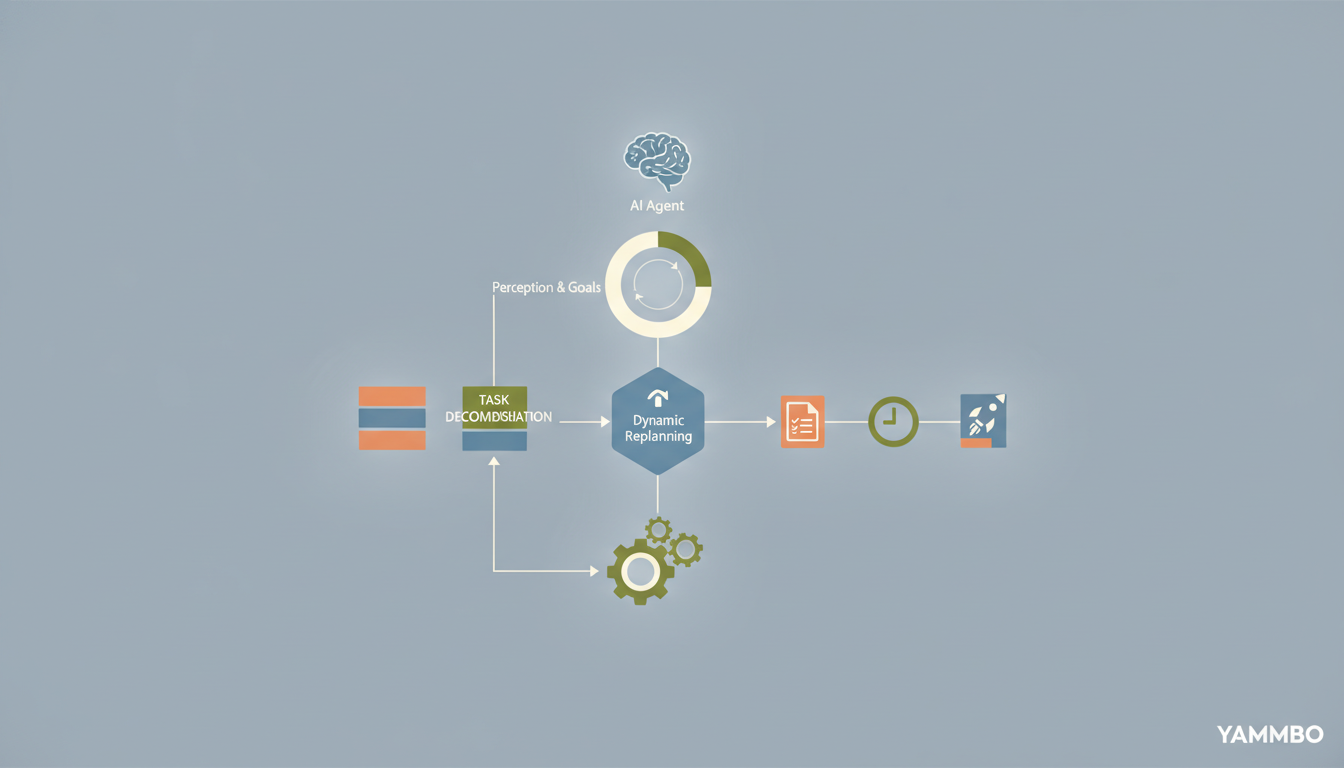
For years, our interaction with artificial intelligence has largely been a call-and-response dialogue. You ask a question, an AI model provides an answer. While incredibly powerful, this model requires constant human guidance, limiting AI to a role of a sophisticated assistant. However, a significant evolution is underway: AI systems are now gaining the ability to plan, make decisions, and execute actions autonomously to achieve a given goal. This paradigm shift introduces us to agentic AI, a concept transforming how we perceive and utilize artificial intelligence.
Understanding AI Agency: Beyond Simple Responses
The term "agentic" stems from "agency," which in this context refers to an AI's capacity to act independently and exert its own will towards accomplishing a defined objective. Unlike a traditional chatbot that patiently waits for your next prompt, an agentic AI is given a high-level goal and then autonomously determines the necessary sequence of steps to reach that goal. This involves a much more sophisticated set of behaviors:
- Planning: Breaking down a complex goal into manageable sub-tasks.
- Tool Use: Employing various external resources such as web search engines, code interpreters, email clients, or other APIs to gather information or perform actions.
- Decision Making: Choosing the most appropriate tool or action at each step based on the current state and the overall goal.
- Self-Correction: Evaluating the outcome of an action and, if it falls short or fails, adjusting its approach and retrying.
- Memory: Remembering past actions, observations, and user preferences to maintain context and improve future performance.
Consider the analogy: a conventional chatbot is like a highly knowledgeable librarian who answers specific questions you pose. An AI agent, on the other hand, is like entrusting that librarian with the task of "researching and summarizing all recent publications on quantum computing, then drafting a report and emailing it to my team." The librarian (agent) would then independently embark on the entire process, utilizing various resources, making decisions, and correcting course as needed, without you dictating every single action.
The Core Difference: Chatbot vs. AI Agent Workflow
To truly grasp the power of agentic AI, it's helpful to contrast its operational flow with that of a more traditional chatbot. The distinction lies in the complexity and autonomy of their respective processing loops.
The Chatbot's Simple Loop
A chatbot operates on a straightforward, reactive cycle:
- User Input: You type a message or ask a question.
- AI Processes: The chatbot's language model analyzes your input.
- AI Generates Reply: Based on its training and the input, it formulates a response.
- Output: The reply is presented to you.
This loop concludes after each interaction, awaiting your next prompt. It's excellent for conversational interfaces and direct information retrieval but lacks the initiative to pursue multi-step objectives.
The AI Agent's Complex, Iterative Loop
An AI agent, by contrast, follows a much more dynamic and self-directed process:
- Goal Definition: You provide the agent with a high-level objective (e.g., "Plan my trip to Berlin next month").
- Planning: The agent's reasoning engine breaks down the goal into a sequence of smaller, actionable steps (e.g., "Find flights," "Find hotels," "Create itinerary").
- Tool Selection: For each step, the agent determines which external tool or internal function is most appropriate (e.g., web search for flights, a booking API for reservations).
- Action Execution: The agent uses the selected tool to perform an action (e.g., runs a web search query).
- Result Evaluation: The agent analyzes the outcome of the action. Was it successful? Is the information complete? Does it meet the criteria?
- Self-Correction/Adjustment: If the result is unsatisfactory, the agent modifies its approach, tries a different tool, refines its query, or revises its plan. This step is critical for robustness.
- Iteration: The agent repeats steps 3-6 until the current sub-task is complete.
- Progression: Once a sub-task is done, the agent moves to the next step in its overall plan.
- Goal Achievement: The loop continues until the entire high-level goal is accomplished.
This ability to plan, act, evaluate, and self-correct is what fundamentally differentiates agentic AI. It transforms AI from a conversational partner into an autonomous executor of complex tasks.
Deconstructing an AI Agent: Key Components
Regardless of its specific application, every AI agent relies on a set of core architectural components working in concert to achieve its objectives.
The Reasoning Engine (The "Brain")
At the heart of any AI agent is its reasoning engine, typically powered by a Large Language Model (LLM) such as GPT-4 or similar advanced models. This component serves as the agent's "brain," responsible for:
- Goal Interpretation: Understanding the user's high-level objective.
- Strategic Planning: Devising a step-by-step plan to achieve the goal.
- Decision Making: Choosing which action to take or which tool to use at any given moment.
- Self-Reflection: Analyzing outcomes and determining if adjustments are needed.
The LLM's natural language understanding and generation capabilities allow the agent to process instructions, reason about complex scenarios, and formulate internal thoughts and external communications.
Memory Systems
For an agent to operate effectively over time and across multiple interactions, it needs robust memory capabilities. These typically come in two forms:
- Short-Term Memory (Context Window): This holds the immediate conversational history, current task details, and intermediate results. It allows the agent to maintain coherence within a single task execution, remembering what it just did or said. This is often managed within the context window of the underlying LLM.
- Long-Term Memory (Knowledge Base): This stores persistent information, such as user preferences, past successful strategies, learned facts, or specific domain knowledge. Long-term memory enables the agent to learn and adapt over extended periods, making its actions more personalized and efficient in subsequent tasks. This might involve vector databases or traditional databases.
Tool Integration
An AI agent without tools is essentially a sophisticated chatbot. Tools are the agent's "limbs," extending its capabilities beyond text generation to interact with the real world or digital services. These can include:
- Web Search: To gather up-to-date information from the internet.
- Code Interpreters: To write, execute, and debug code for data processing, calculations, or complex logic.
- File System Access: To read, write, or modify documents and data.
- API Calls: To interact with external services like booking platforms, email clients, calendar applications, or custom business systems.
- Email/Messaging Clients: To send communications or notifications.
The agent's reasoning engine dynamically selects and orchestrates these tools based on the current task and its evolving plan.
The Feedback Loop & Self-Correction
This component is arguably the most critical for an agent's reliability and autonomy. After executing an action using a tool, the agent doesn't just move on; it evaluates the outcome. This feedback loop involves:
- Observation: What was the result of the action? (e.g., "Did the flight search return results?", "Was the booking confirmed?").
- Evaluation: Does the observed result align with the expected outcome? Is it sufficient for the current step? Does it move closer to the overall goal?
- Reflection: If the result is unsatisfactory, the agent reflects on what went wrong and how to adjust its strategy. This might involve refining a search query, trying a different tool, or even re-planning a portion of the task.
This continuous cycle of action, observation, evaluation, and adjustment allows agentic AI to navigate uncertainties, recover from errors, and iteratively refine its path towards the goal without constant human intervention.
Practical Application: An Agentic AI in Action
To illustrate the practical power of agentic AI, let's consider a common scenario: planning a business trip. Imagine you provide an AI agent with a single, high-level instruction:
"Book me the cheapest flight to Tokyo next Tuesday, find a highly-rated hotel near the convention center for three nights, and add all confirmed details to my calendar."
A traditional chatbot might offer links to flight and hotel booking sites, leaving you to sift through options and make reservations manually. An AI agent, however, would autonomously orchestrate the entire process:
- Initial Goal Interpretation: The agent understands the request involves travel booking, accommodation, and calendar management.
- Flight Search & Booking:
- It first accesses a web search tool or a flight booking API.
- It queries for "cheapest flights to Tokyo next Tuesday."
- It parses the results, compares prices, and identifies the most economical option.
- It then uses a booking tool to complete the flight reservation, filling in your predefined passenger details from its long-term memory.
- It verifies the booking confirmation. If unsuccessful, it might try another airline or adjust dates slightly if allowed.
- Hotel Search & Booking:
- Concurrently or sequentially, it uses a web search or hotel booking API to find "highly-rated hotels near [convention center name] for three nights."
- It filters results based on ratings, price, and proximity.
- It cross-references availability and secures the booking.
- It verifies the hotel confirmation.
- Information Extraction & Calendar Integration:
- The agent extracts key details from both flight and hotel confirmations (dates, times, locations, confirmation numbers).
- It then accesses your calendar application (via an API).
- It creates new events for the flight and hotel stays, populating them with all relevant information.
- It verifies that the events were successfully added to your calendar.
- Summary & Notification:
- Finally, the agent compiles a concise summary of the entire trip, including flight details, hotel information, and calendar entries.
- It uses an email tool to send this summary to you, confirming that the goal has been achieved.
Throughout this complex process, the agent makes numerous micro-decisions, utilizes various tools, and continuously checks its progress, all driven by your initial high-level instruction. You simply set the goal and receive the completed outcome.
Building a Conceptual AI Agent: A Step-by-Step Blueprint
While developing a full-fledged AI agent requires advanced programming skills and access to powerful LLMs and APIs, understanding its conceptual blueprint allows you to grasp the underlying mechanics. Here’s a step-by-step guide to how one might architect such a system:
Step 1: Define the Objective and Constraints
The first and most critical step is to clearly articulate the agent's purpose. A vague goal leads to vague outcomes. For instance, instead of "Help me with my marketing," define it as "Generate five unique blog post ideas about AI agents, including a brief outline for each, and save them to a document titled 'AI_Agent_Blog_Ideas.txt'."
- Clarity: Ensure the goal is unambiguous.
- Measurability: How will the agent know it has succeeded? (e.g., "five ideas," "saved to file").
- Constraints: What are the limitations or specific requirements? (e.g., "unique," "brief outline").
This initial definition guides all subsequent design decisions.
Step 2: Design the Planning Module
This module, often powered by an LLM, is responsible for taking the high-level objective and breaking it down into a sequence of actionable sub-tasks. It's where the agent "thinks" about how to approach the problem.
function plan_task(goal, current_state): # Use LLM to generate a sequence of steps plan = llm.generate_plan(goal, current_state) return parse_plan(plan) # e.g., ["search_web('AI agent blog topics')", "generate_ideas(results)", "outline_ideas(ideas)", "save_to_file(content, filename)"]The planning module might also incorporate heuristics or pre-defined workflows for common tasks, allowing it to adapt its strategy based on the input goal.
Step 3: Curate and Connect Tools
The agent needs a suite of tools to interact with the world. These tools are essentially functions that the planning module can call. Each tool should have a clear description of what it does and what arguments it accepts.
Examples of tool definitions:
tools = { "web_search": { "description": "Searches the internet for information.", "parameters": {"query": "string"} }, "generate_text": { "description": "Generates text based on a prompt.", "parameters": {"prompt": "string"} }, "write_file": { "description": "Writes content to a specified file.", "parameters": {"filename": "string", "content": "string"} }, "send_email": { "description": "Sends an email to a recipient.", "parameters": {"to": "string", "subject": "string", "body": "string"} }}The agent's reasoning engine will use these descriptions to decide which tool is appropriate for a given step in its plan.
Step 4: Implement the Execution and Feedback Loop
This is the core iterative process where the agent acts and learns. For each step in its plan, it performs the following:
- Select Tool and Arguments: Based on the current step and available information, the agent decides which tool to use and what arguments to pass to it.
- Execute Action: The chosen tool is invoked.
- Observe Result: The output or status from the tool's execution is captured.
- Evaluate and Reflect: The agent (via its LLM) analyzes the result.
- Is the result what was expected?
- Did the action move closer to the goal?
- Are there any errors or ambiguities?
- Adjust or Proceed:
- If the result is unsatisfactory, the agent might generate a new sub-plan, refine its query, or try a different tool.
- If successful, it updates its internal state and moves to the next step in the plan.
while not goal_achieved: action = decide_next_action(plan, current_state, available_tools) result = execute_tool(action.tool_name, action.arguments) current_state = update_state(current_state, result) if evaluate_result(result, current_step_goal) == "failure": reflect_and_replan(current_state) else: move_to_next_step()Step 5: Integrate Memory Management
Effective memory is crucial for context and learning. The agent needs to manage both short-term and long-term information.
- Short-Term Context: The current conversation history, intermediate data, and immediate observations are passed to the LLM with each planning or reflection prompt. This ensures the LLM has all relevant context for its current decision.
- Long-Term Storage: Important facts, user preferences, successful strategies, or learned knowledge should be stored in a persistent memory system (e.g., a vector database for semantic search, or a traditional database). When the agent starts a new task or needs historical context, it can retrieve relevant information from this long-term memory.
By carefully designing these components, you can conceptually build an AI agent capable of tackling complex, multi-step objectives with a high degree of autonomy.
Considerations and Future Implications
The rise of agentic AI marks a pivotal moment in technology, promising unprecedented levels of automation and efficiency. These systems can free up human workers from repetitive, multi-step tasks, allowing them to focus on more creative and strategic endeavors. From automating customer service workflows to accelerating scientific research by autonomously running experiments and analyzing data, the potential applications are vast.
However, this evolution also brings important considerations. The increased autonomy of AI agents necessitates robust error handling, ethical guidelines, and transparent operational frameworks. Understanding how these agents make decisions, ensuring their actions align with human values, and developing mechanisms for human oversight are crucial as agentic AI becomes more integrated into our daily lives and professional environments. As these systems grow in capability, they will undoubtedly reshape our interactions with technology, moving us towards a future where AI acts not just as an assistant, but as a proactive partner in achieving complex goals.
To explore how AI can empower your online presence, visit Yammbo Web for tools that help you build smart, dynamic websites.