How to Master Space Haven: A Guide to Colony and Ship Management
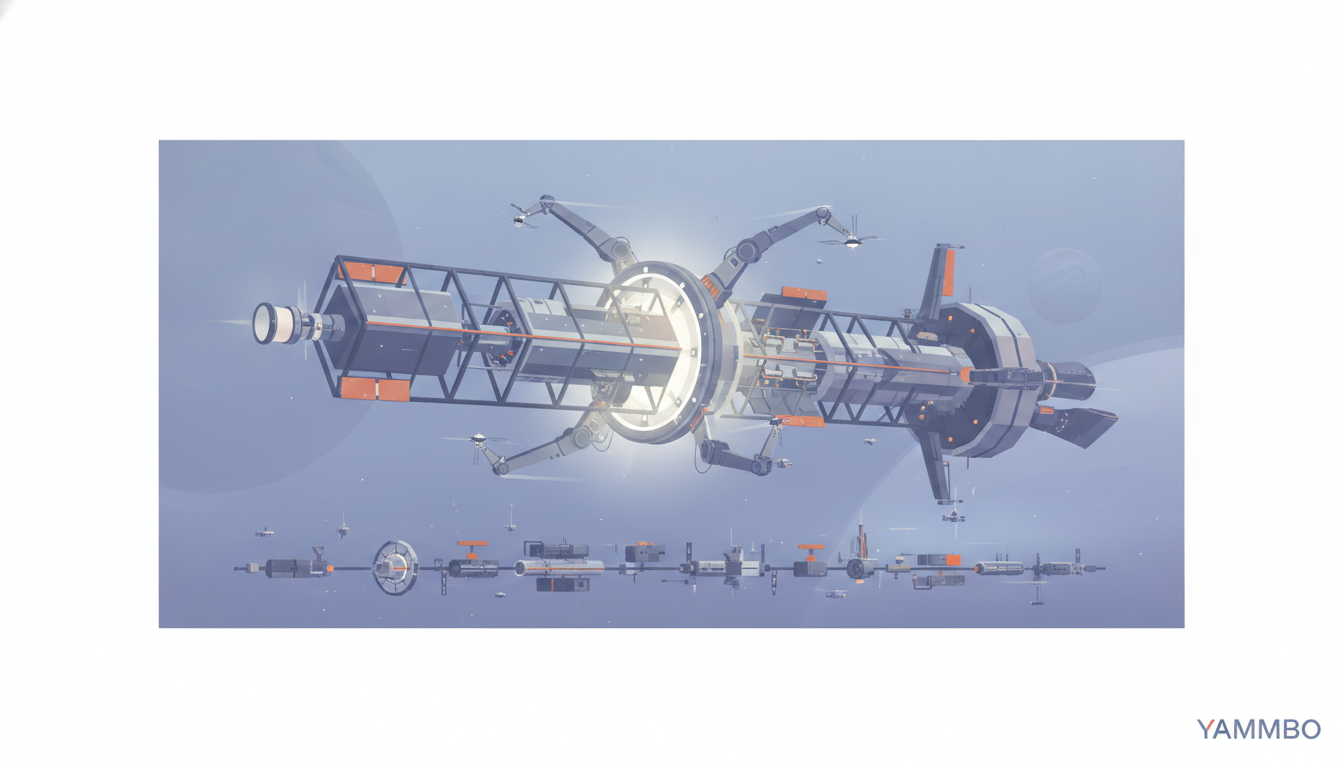
Managing a space colony in a survival simulation game presents a unique set of challenges, from maintaining your crew's well-being to expanding your vessel and exploring the vastness of space. Success hinges on a deep understanding of interconnected systems, where power, life support, and resource management are paramount. This tutorial will walk you through the fundamental steps of establishing a thriving space haven, ensuring your crew's survival, and navigating the cosmos.
Step 1: Establishing Core Life Support and Crew Well-being
In Space Haven, your crew's survival is directly tied to the infrastructure you build. Before venturing into deep space or complex operations, you must secure basic life support and ensure your crew's fundamental needs are met. This involves carefully planning your ship's layout to accommodate essential facilities and a robust power grid.
Begin by constructing vital modules such as beds, toilets, and a kitchen area. Each crew member requires a bed for rest, and private quarters contribute significantly to their mood. Toilets are essential for hygiene, and a functional kitchen is necessary to process raw food into edible meals, preventing starvation and maintaining morale. Pay close attention to the comfort and privacy ratings of these areas, as a discontented crew is an unproductive and potentially dangerous one.
Next, focus on your ship's power infrastructure. Power generators are the heart of your vessel, producing the electricity required to run all systems. Place them strategically, considering their heat output and potential need for maintenance access. Once generators are in place, you must establish a power distribution network using power nodes. These nodes act as conduits, routing electricity from your generators to various ship components. To connect a module, select a power node and then drag a connection line to the module. Ensure every critical system, especially life support, is adequately powered.
Crucial life support systems include the oxygen generator and water purifier. The oxygen generator produces breathable air, preventing suffocation, while the water purifier converts raw water into potable water for drinking and other uses. Both are energy-intensive and must be continuously powered. Position them centrally or in easily accessible areas for efficient power routing and maintenance. Regularly check the power grid overlay to ensure all systems are receiving sufficient energy and there are no overloaded nodes. A stable power supply is the bedrock of your space haven.
Step 2: Mastering Resource Acquisition and Ship Construction
Expanding your space haven and ensuring long-term survival requires a steady supply of resources. Mining is your primary method for acquiring raw materials, which are then used in construction and manufacturing. Understanding how to efficiently extract and utilize these resources is key to growth.
To begin resource acquisition, you'll need to construct a mining pod hangar. Once built, assign a mining pod to it. This pod will automatically deploy to designated asteroid fields or resource deposits to extract materials. Open your Starmap and locate nearby asteroids or derelict ships that contain valuable minerals such as iron, carbon, silicon, or hyperium. Select a resource deposit and assign your mining pod to it. The pod will then automatically travel to the location, begin extraction, and return to the hangar to unload its haul. Monitor your resource stockpiles regularly to ensure you have enough materials for your planned expansions.
With resources flowing in, you can begin to expand your ship. The build menu allows you to add new modules, walls, and airlocks. To construct a new room, first place down the floor tiles, then erect walls to enclose the space. Remember to add doors or airlocks for crew access and to maintain atmospheric integrity. When adding new modules, such as additional crew quarters, storage rooms, or workshops, consider their placement relative to existing systems like power nodes and life support. Efficient layouts reduce crew travel time and optimize resource distribution.
Building also involves maintaining atmospheric pressure and temperature. After constructing new sections, you may need to install additional ventilation systems or heaters/coolers to ensure a comfortable and breathable environment for your crew. Verify successful construction by checking the ship's atmospheric overlay and ensuring new modules are powered and accessible.
Step 3: Navigating the Stars and Executing Hyperspace Jumps
Exploring the vastness of space is a core aspect of Space Haven, allowing you to discover new resource rich systems, encounter other factions, and progress through the game's narrative. Interstellar travel is facilitated through hyperspace jumps, but these require specific ship components and careful planning.
Before you can chart a course beyond your current star system, you must install two critical components: a Navigation Console and a Hyperium Hyperdrive. The Navigation Console serves as your bridge's control center, allowing crew members to plot courses and manage ship movements. The Hyperium Hyperdrive is the engine that enables faster-than-light travel. Both modules consume significant power and require a crew member with navigation skills to operate efficiently. Ensure they are properly powered and staffed.
Once these components are in place, open your Starmap. The Starmap displays nearby star systems, identified resources, and potential hazards. To initiate a hyperspace jump, select a target star system on the Starmap. The system will calculate the required amount of Hyperium fuel, which is a rare resource obtained through mining or trade. Ensure your ship has sufficient Hyperium in its storage. Once the destination is selected and fuel is confirmed, a crew member assigned to the Navigation Console can initiate the jump sequence.
The ship will then charge its hyperdrive, and after a short countdown, it will enter hyperspace, transporting your vessel to the chosen destination. During the jump, your ship is vulnerable, so ensure all critical systems are operational before initiating travel. Upon arrival in a new system, be prepared to encounter new challenges, including different resource types, environmental hazards, or even hostile encounters. Successful navigation opens up new opportunities for expansion and survival.
Step 4: Defending Your Vessel and Engaging in Combat
Space is not always peaceful; you will inevitably encounter threats ranging from asteroid fields to hostile spacecraft and alien lifeforms. Protecting your ship and crew requires a combination of static defenses and active crew engagement.
To defend your ship from external threats, deploy Point Defense Turrets. These turrets automatically target and shoot down incoming projectiles, such as asteroids, enemy drones, or missiles fired by hostile vessels. Place turrets strategically around your ship's exterior to cover all approach vectors. Ensure they have a clear line of fire and are connected to your ship's power grid. Different turret types may have varying ranges and damage outputs, so choose them based on the anticipated threats. Regularly check their ammunition supply and power status.
Beyond automated defenses, your crew members can be drafted for active combat. To do this, select individual crew members and equip them with weapons from your inventory. Weapons can be manufactured in workshops or salvaged from derelict ships. Once armed, crew members can be ordered to specific locations within your ship or deployed onto derelict vessels during boarding operations. When boarding, your armed crew can engage hostile aliens or “clankers” (robotic enemies) encountered on these ships.
During combat, position your crew carefully, utilizing cover and choke points to gain an advantage. Monitor their health and morale, retreating if necessary. Successful combat operations can yield valuable salvage, including resources, equipment, and even new crew members. Verification of successful defense includes observing destroyed threats and your crew returning safely with any acquired loot.
Step 5: Optimizing Crew Management and Task Efficiency
Efficient crew management is crucial for the long-term success of your space haven. Your crew members are not just workers; they are individuals with skills, needs, and moods that directly impact productivity. Optimizing their tasks and ensuring their well-being will lead to a more effective and harmonious colony.
Crew members in Space Haven operate by taking on individual tasks. While they don't always chain related jobs together automatically, you can influence their efficiency through careful planning and prioritization. Access the crew management panel to view each member's skills, traits, and current assignments. Assigning crew members to roles that align with their highest skills (e.g., a skilled engineer to repair tasks, a botanist to farming) will significantly improve the speed and quality of work.
Prioritize critical tasks using the task management interface. For instance, if oxygen levels are dropping, manually prioritize “repair oxygen generator” to ensure it's addressed immediately. You can also designate specific zones for certain activities, such as a “mining zone” for your mining pods or a “medical bay” for injured crew. While crew members might return to base after each small haul or task, minimizing travel distance between related work areas can indirectly improve overall efficiency. For example, placing resource storage near workshops reduces the time crew spend transporting materials.
Maintaining high crew morale is also vital. Ensure they have sufficient food, rest, and privacy. Providing recreation facilities, even simple ones like a mess hall, can boost their mood. A happy crew works faster, makes fewer mistakes, and is less prone to conflicts. Regularly review your crew's needs and adjust your ship's layout or task assignments to address any recurring issues. A well-managed crew is the most valuable asset in your journey through space.
Building and managing a space colony in Space Haven is a deeply rewarding experience that challenges your strategic thinking and resourcefulness. By mastering the fundamentals of life support, resource acquisition, interstellar navigation, and crew management, you can transform a humble starter ship into a thriving galactic outpost. As you continue your journey, remember that adapting to new challenges and optimizing your operations are key to long-term survival in the harsh vacuum of space. To learn more about building robust online presences, visit Yammbo at https://yammbo.com.