Designing a High-Performance Programmatic Ad Exchange
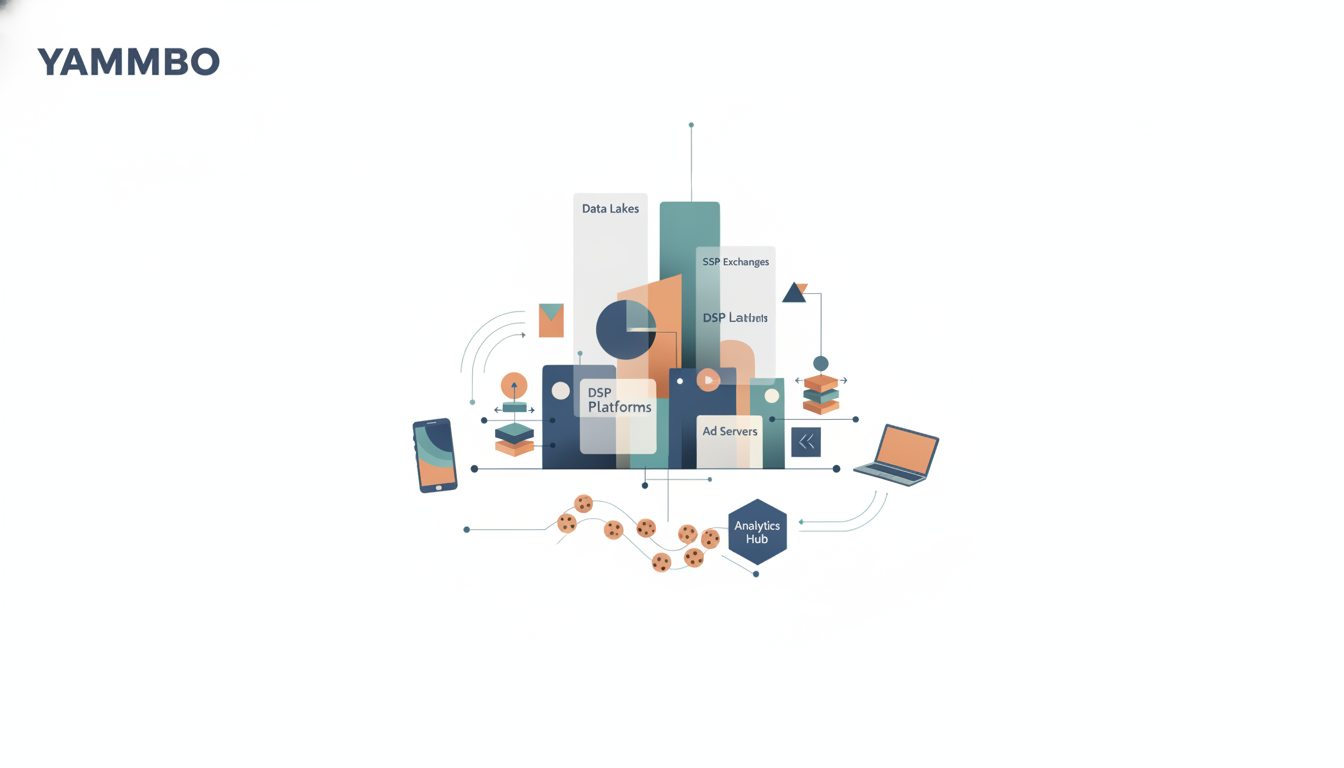
Building a programmatic ad exchange (ADX) system presents unique challenges, particularly around ultra-low latency, massive scale, and efficient cost management. These systems automate the buying and selling of digital ad inventory through real-time auctions, demanding robust cloud infrastructure. This tutorial provides a hands-on guide to architecting an ADX, focusing on its core components, performance targets, and strategies for deploying a scalable and cost-effective solution.
Step 1: Understand ADX Architecture and Performance Targets
An ad exchange system fundamentally connects publishers with advertisers, facilitating real-time bidding for ad placements. It typically comprises three main layers:
- Supply-Side Platform (SSP): Manages publisher inventory and sends ad requests to the ADX.
- ADX Core: The central auction engine that normalizes messages, runs the auction, and routes responses.
- Demand-Side Platform (DSP) / Data Management Platform (DMP): Submits bids based on advertiser campaigns and user data.
The end-to-end request flow, from a user opening an app or page to an ad being returned, typically follows this path:
- SSP sends an ad request to the ADX.
- ADX builds a standardized bid request.
- The request is fanned out to multiple DSPs.
- DSPs return their bids.
- ADX runs the auction and selects a winner.
- The winning ad is returned to the user.
- Impression or click is logged.
Performance is paramount in this ecosystem. Key targets include:
- Total Time Budget: Approximately 150 milliseconds (ms) from user request to ad display.
- Internal ADX Processing: Often under 20 ms.
- Scale: Millions of queries per second (QPS) across horizontally scalable clusters.
- Data-Driven Decisions: Every request involves real-time data lookups and machine learning inference.
Achieving these targets requires careful consideration of infrastructure, particularly regarding network latency and processing speed.
Step 2: Design the Ingress and Edge Tier
The ingress and edge tier is the first point of contact for ad requests, demanding extreme low latency and high throughput. This tier is responsible for receiving requests from SSPs and efficiently routing them to the ADX core.
Key components and considerations:
- Global DNS: Utilize a robust DNS service that supports Anycast or GeoDNS to route users to the nearest data center, minimizing initial latency. Services like DigitalOcean DNS can provide this functionality.
- Load Balancers: Employ L4/L7 load balancers to distribute incoming traffic across your application servers. Solutions like DigitalOcean Load Balancers are designed for high-scale environments, supporting up to 200 backend nodes and aggregating millions of requests per second. For more granular control or custom logic, you might deploy Envoy or Nginx on dedicated virtual machines (Droplets).
- Application Servers: The initial processing of incoming requests should be handled by horizontally scaled clusters of application servers. These can be provisioned using DigitalOcean Droplets, potentially leveraging Premium Droplets for enhanced CPU and network performance (up to 10 Gbps networking). Autoscale pools can automatically adjust capacity based on traffic load.
The goal here is to absorb massive traffic spikes and ensure that requests are quickly handed off to the ADX core with minimal delay.
Step 3: Build the ADX Exchange Core
The ADX exchange core is the heart of the system, acting like a high-frequency trading platform for ad impressions. This is where the actual auction logic resides, requiring exceptional speed and determinism.
Core components of the ADX exchange:
- Bid Request Builder: Converts incoming ad requests into a standardized format, often OpenRTB.
- DSP Router: Selects which DSPs are relevant for a given request based on targeting criteria.
- Fanout Engine: Sends parallel bid requests to dozens or hundreds of selected DSPs simultaneously.
- Timeout Controller: Enforces strict deadlines for DSP responses, typically between 50 and 120 ms for the entire bidding process.
- Auction Engine: Runs the actual first-price or second-price auction logic to determine the winning bid.
Technical characteristics for this tier are critical:
- High-Performance Languages: Often implemented in languages like C++, Go, or Rust for optimal execution speed.
- In-Memory Processing: To avoid disk I/O latency on the hot path, core auction logic should primarily operate in memory.
- Concurrency Models: Utilize lock-free data structures or actor-based concurrency to maximize parallel processing efficiency.
For deployment, DigitalOcean Kubernetes (DOKS) provides a robust platform for orchestrating these microservices, allowing for easy scaling and management. For specific high-I/O needs, Storage-Optimized Droplets with NVMe local SSDs can be used for components that require extremely fast local storage access, though the core auction logic aims to minimize disk interaction.
Step 4: Integrate DSP/DMP and Data Services
Beyond the core auction, an ADX system relies heavily on data for user profiling, bid optimization, and analytics. The DSP/DMP tier manages user data and executes campaign logic.
Key data services:
- User Profile System (DMP/CDP): Stores and manages extensive user behavior data. This system needs to be highly available and capable of real-time lookups. Managed database services like DigitalOcean Managed MySQL, PostgreSQL, or Redis are excellent choices for this, offering scalability and operational simplicity.
- Real-time Data Streaming: For collecting and processing event data (impressions, clicks, bids), a managed Kafka service is ideal. DigitalOcean Managed Kafka can handle high-throughput data streams, ensuring all events are captured for analytics and machine learning.
- Object Storage: For storing large volumes of raw logs, ad creatives, and historical data, an object storage solution like DigitalOcean Spaces provides cost-effective, scalable storage with high durability.
- Virtual Private Cloud (VPC): To ensure secure and private communication between your ADX core, data services, and other internal components, configure a Virtual Private Cloud. This isolates your network traffic and enhances security.
These services support the data-intensive aspects of ad tech, enabling intelligent bidding and campaign management.
Step 5: Optimize for Cost and Scalability
Cost management, particularly for network bandwidth, is a significant factor in ADX deployments. Bandwidth can account for 30-40% of total cloud spend for large exchanges.
Strategies for cost and scalability optimization:
- Bandwidth Cost Modeling: Understand your cloud provider's egress pricing. DigitalOcean, for example, bills outbound overage at $0.01 per GiB and pools included transfer at the team level. Crucially, traffic to and from Managed Kafka and other managed databases often incurs no bandwidth fees, which can significantly reduce costs for data-intensive workloads.
- Horizontal Scaling: Design all layers of your ADX for horizontal scalability. This means adding more instances of a service rather than increasing the size of a single instance. Kubernetes (DOKS) and Droplet autoscale groups are fundamental here.
- Regional Deployment: For global reach and reduced latency, deploy your ADX across multiple regions (e.g., US, EU, APAC). This ensures users are served from the closest data center. Regional Load Balancers are essential for distributing traffic effectively across these regions.
- Efficient Data Transfer: Minimize unnecessary data transfers. For example, pre-processing data close to its source before sending it to the core ADX can reduce bandwidth.
By carefully planning your architecture with these considerations, you can build an ADX that meets stringent performance demands while remaining cost-efficient.
Building a high-performance programmatic ad exchange requires a deep understanding of distributed systems, real-time data processing, and cloud infrastructure. By focusing on ultra-low latency, horizontal scalability, and strategic cost management, you can create a robust and efficient ad tech platform. To learn more about building scalable web applications, visit Yammbo Web at https://web.yammbo.com.